Current Courses
Introduction to Logic
Format: Asynchronous, self-paced
Part of the Membership Program
Format: Online, Fridays 1-2 pm EST
Starting September 4, 2026
Part of the Membership Program
Theory of Knowledge
Format: Online, Fridays 2-3 pm EST
Starting September 4, 2026
Part of the Membership Program
The Epistles: Studies in Islamic Spirituality
Course Catalogue
-
![]()
The Epistles: Studies in Islamic Spirituality
This course offers a sustained study of major treatises by Dr. Akram Almajid in Islamic metaphysics and spiritual theology, exploring divine unity, the soul, cosmology, prophecy, love, eschatology, and spiritual rank. Through close readings of the Sharḥ Risālat al-Tawḥīd and Risālat al-Nafs al-Mālika, students examine the meaning of tawḥīd and the sovereignty of the soul, followed by an analysis of cosmic becoming in Sirr al-Kawn wa-Lughat al-Takwīn and prophetic exemplarity in Maqāmāt al-Anbiyāʾ.
The course then turns to al-Ḥubb wa-al-Maḥabba as the ontological ground of devotion, the doctrine of return (al-maʿād) and the creation of spirits (khalq al-arwāḥ), spiritual hierarchy in Risālat al-Manzila, the metaphysics of mortality in Risālat al-Mawt, and the theological implications of loyalty and disassociation in Risālat al-Tawallī wa-al-Tabarrī, concluding with the contemplative symbolism of Risālat al-Tabassum. Together, these texts articulate a unified vision of existence grounded in divine unity, love, and ultimate return.
-
![]()
The New Creation (al-Khalq al-jadīd)
This course examines the path to divine realization through a structured study of ṭarīq Allāh (the Path of God) and ʿilm al-ḥaqīqa (the knowledge of Reality). Beginning with foundational principles, it traces the seeker’s progression through the manifestations (majālī) and stations (maqāmāt) of Reality, clarifying how truth discloses itself and how it is inwardly realized. Special attention is given to the distinction between ʿilm al-ishāra (allusive, symbolic knowledge) and ʿilm al-ʿibāra (discursive, articulated expression), highlighting the epistemological shift from indication to direct comprehension.
The course further explores the structure of existence through the doctrine of the universal worlds and the Five Presences (al-ḥaḍarāt al-khams), followed by a systematic analysis of the forms and inner contents of the intellect (al-ʿaql), the soul (al-nafs), and the body (al-badan). It culminates in a study of spiritual states such as ecstasy and loss (al-wajd wa al-faqd), the composition and perfection of the intellect, and the harmonization of intellectual beauty and majesty. Through symbolic teachings such as “the White Pearl and the Red Ruby” and reflections on the “Intellectual Garden,” the course presents an integrated vision of metaphysical ascent, intellectual completion, and the ultimate realization of Reality
-
![]()
The Old Creation (al-Khalq al-qadīm)
This course explores major theological and metaphysical themes in the Islamic intellectual tradition through a focused study of Sūrat al-Mulk and selected mystical and philosophical texts. Beginning with the sūrah’s name, merit, and theological structure, the course examines the path to God (ṭarīq Allāh) as a disciplined movement from outward submission to inward realization. It analyzes the relationship between islām, īmān, and tawba as graduated modes of religious consciousness, and reflects on the dynamics of intellect (al-ʿaql) and ignorance (al-jahl) in shaping human understanding. The spiritual rank and function of the People of God (ahl Allāh) are studied as embodiments of realized knowledge within the community.
Particular attention is given to the concept of divine authority (sulṭān) as the ground of authentic naming, judgment, and spiritual insight, as well as to the theological and existential significance of the divine names al-Muḥyī and al-Mumīt. Qurʾānic conceptions of life and death—both in this world and in the hereafter—are examined not merely as eschatological doctrines but as metaphysical states tied to knowledge, presence, and awakening. By integrating theological analysis, philosophical reasoning, and Sufi reflection, the course presents a coherent vision of spiritual realization grounded in divine unity, moral responsibility, and existential transformation.
-
![]()
The Written (al-Musṭatar)
This course introduces al-Mustaṭar as a work that moves between gnosis, Qur’anic exegesis, and demonstrative (burhānī) reasoning. Engaging difficult Qur’anic passages and parallel narratives in the Bible and Torah, the course explores how interpretive challenges arise not from the texts themselves but from the limits of human understanding.
Through sustained reflection on prophetic narratives such as Pharaoh, Noah, and Jonah, the course examines tensions between faith-based readings and empirical or historical critique. Al-Mustaṭar proposes a distinctive framework rooted in the idea of “that which is written” (mustaṭar) in the Tablet of Reality (lawḥ al-wāqiʿ) or Guarded Tablet (Lawḥ al-Maḥfūẓ), affirming that realities may possess true existence even if they are not manifest to the senses. Students will study how the text seeks to reconcile revelation and reason, defending the reality of divine scripture while expanding the very meaning of existence, manifestation, and truth.
-
![]()
Encounters of Purity and Enmity (al-Munazilat fi-l-muṣāfāt wa-l-muʿādāt)
This course offers a sustained study of the Munāzalāt—a technical term in mysticism denoting modes of divine “descent,” engagement, and relational manifestation. Linguistically derived from nuzūl (descent) and nizāl (engagement or confrontation), munāzala signifies a reciprocal act between two agents, each drawing the other into encounter. In its metaphysical usage, the term encompasses descent through intimacy, descent through opposition, descent through domination, and descent through gift and need. The course examines how these meanings unfold as structured spiritual stations (manāzil) within a coherent ontology of divine self-disclosure.
Following the structure of the text, the course proceeds from the identity and rank of the Munāzalāt to specific stations: affection and enmity, mutual overcoming, election, loyalty and hostility, establishment, denial, and the transformations of ruling and wisdom. Special attention is given to the stations of the intellect and the heart, the attachment of the heart, the adherence to divine judgment, and the subtle interpenetration of affection within enmity and enmity within affection. Throughout, we explore how descent functions both as confrontation and as intimacy, as distancing and as gift, revealing a dynamic metaphysics of relational being.
-
![]()
The Law of Correspondence
This course offers a focused study of The Law of Correspondence, drawn from Professor Akram Almajid’s Manāzil al-sāʾirīn: Bāb al-firāsa. Although traditionally linked to the science of firāsa, the work is fundamentally concerned with the principle of correspondence—the patterned relationships that bind together the levels of existence. It presents a systematic vision of how realities mirror and signify one another across the hierarchy of Being.
Students will explore how outward forms correspond to inward meanings, how degrees of existence are interconnected, and how divine manifestation unfolds through ordered structures rather than isolated events. Correspondence is treated not as symbolic association, but as a disciplined metaphysical science grounded in ontology and intellectual method, offering a coherent account of unity within multiplicity.
Through close reading of the parallel Arabic-English text and guided analysis of its philosophical foundations, participants will gain a rigorous understanding of the doctrine of correspondences and its role in shaping the mystical worldview. The course is designed for serious students of philosophy and Sufism seeking a systematic account of the patterned structure of reality.
-
![]()
Studies in Fusus al-hikam
This course offers a complete guided study of Ibn al-ʿArabī’s Fuṣūṣ al-Ḥikam through the prism of Naqsh al-Fuṣūṣ and Jāmī’s Naqd al-Nuṣūṣ, as presented in Inscriptions of Wisdom. Rather than being limited to a fixed number of weeks, the course unfolds gradually through the Introduction and all twenty-seven prophetic chapters.
The course begins by clarifying the meaning of faṣṣ and ḥikma. Each faṣṣ may be understood as the quintessence of knowledge received by a prophet, determined by the divine name governing that prophetic reality. The faṣṣ is also likened to the setting of a ring, inscribed in the heart of the Perfect Human.
Students will examine how Ibn al-ʿArabī presents each prophet as the bearer of a distinct wisdom and as a locus for the disclosure of a particular divine name. Through Jāmī’s commentary, the course will also show how the concise formulations of the Naqsh open onto broader questions of ontology, divine self-disclosure, prophecy, sainthood, the Perfect Human, and the structure of manifestation.
Across the course, students will study the prophetic “Words” (kalimāt) as archetypal loci of divine self-disclosure. Each prophetic wisdom expresses a distinct divine name and metaphysical principle while contributing to the unified vision of reality articulated by Ibn al-ʿArabī.
-
![]()
Introduction to Logic
This course introduces the classical science of logic as an instrument for the correction of thought. Beginning with the traditional definition of logic as “an instrument governed by rules whose observance protects the mind from error in thought,” the course examines why logic was regarded as indispensable for philosophy, theology, law, and the rational sciences more broadly. Students will learn how logic regulates the movement from what is known to what is unknown, clarifies the distinction between conception (taṣawwur) and assent (taṣdīq), and provides the foundations for sound definition and valid argument.
The course begins with a careful study of the preliminaries of logic, including the subject, aim, benefit, and rank of the science. It then examines the parts of the sciences: subjects, principles, and questions, showing how each science is organized around what it seeks to establish. Special attention is given to the relation between logic and other disciplines, the status of logic as an instrumental science, and the traditional debate over whether logic is concerned only with form or also with content.
The course also explains how the five arts—demonstration, dialectic, rhetoric, poetry, and fallacy—classify arguments according to the content of their premises. Students will be introduced to the classical architecture of logic: the five universals, definition, propositions, syllogism, and the five arts. The course clarifies the role of primary and secondary intelligibles, the meaning of formal and content-based reasoning, and the way logic prepares the student to study the higher sciences.
By the end of the course, students will have a clear map of the logical tradition and a firm foundation for entering its technical questions in a systematic and specialized manner.
-
![]()
Theory of Knowledge
This course introduces the theory of knowledge (epistemology) through a structured study of knowledge, science, and intellectual cognition in classical and modern philosophy, with particular attention to the Islamic philosophical tradition. The course examines what it means to know, how knowledge is formed, and what grounds its truth and certainty.
Students begin by exploring the distinction between knowledge and science, the roles of theory and hypothesis, and the subject matter and aims of epistemology. Historical perspectives are developed through surveys of epistemological thought in general philosophy and Islamic philosophy, alongside close engagement with foundational texts such as Plato’s Theaetetus and the classical tripartite definition of knowledge. Questions of truth, justification, and cognitive reliability are addressed, including early modern contributions, most notably those of John Locke.
The latter part of the course turns to the metaphysical foundations of knowledge, examining the definition and divisions of science, mental existence (al-wujūd al-dhihnī), competing theories of cognition, and philosophical objections and responses. The course culminates in an exploration of the immateriality of knowledge and the unity of intellect, intellector, and intelligible, integrating epistemology with metaphysics.
By the end of the course, students will have gained a coherent framework for understanding knowledge and its philosophical foundations, equipping them for further study in philosophy and related intellectual traditions.
-
![]()
Stations of the Soul
Stations of the Soul: A Guide to Spiritual Wayfaring is a guided study of the classical Islamic doctrine of the soul and the disciplined path of sulūk. Drawing upon Qurʾānic foundations, Prophetic teachings, and the teachings of Dr. Akram Almajid, this course maps the inner architecture of the human being through the seven stations of the soul: al-nafs al-ammāra, al-lawwāma, al-mulhama, al-muṭmaʾinna, al-rāḍiya, al-marḍiyya, and al-kāmila.
The course examines the moral, psychological, and metaphysical dimensions of these stations, clarifying how the soul transitions from appetite and heedlessness to illumination, contentment, and completion. Special attention is given to the subtle dangers of self-deception, the distinction between the righteous (al-abrār) and the near ones (al-muqarrabūn), and the unveiling of the heart within the Imaginal realm (ʿālam al-mithāl).
Beyond theory, the course presents the essential necessities (ḍarūriyyāt) of the path: companionship, spiritual resolve, guidance, taqwā, and invocation (adhkār). It clarifies the relationship between sharīʿa, ṭarīqa, and ḥaqīqa, and outlines the disciplined practices that protect and sustain the light of the heart.
The aim of the course is both conceptual understanding and refined self-awareness. Participants will learn how to identify their own spiritual condition, understand the dynamics of inner transformation, and situate their striving within a coherent and classical framework of Islamic spiritual psychology.
This course is suitable for serious students of Islamic spirituality who seek depth, structure, and clarity in approaching the science of the soul and the path to God. This course offers the first systematic English presentation of Dr. Akram Almajid’s lectures on spiritual wayfaring, critically transcribed and translated by the instructor.


Archived courses
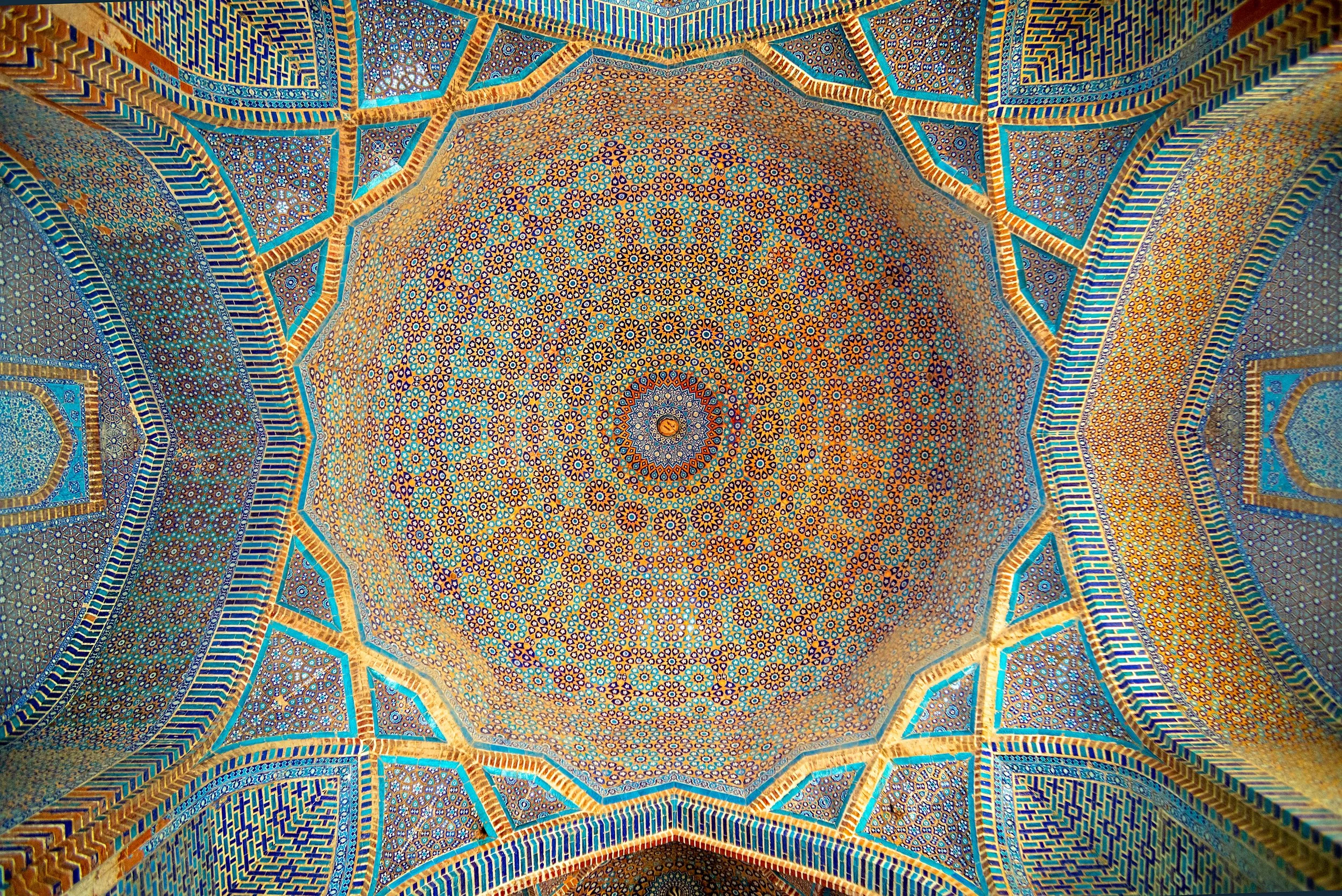
Stations of the Soul